Tuesday, April 23, 2013

A Blog With Few Words: Myanmar Update 3


From Michael: Hey Kids!  Tired of blogs filled with words?  No?  Well, since our goal here in Yangon has been  writing a play and a training manual, I sure as hell am tired of words, so this blog entry will use pictures as the jump off.  

First up:
These are our good friends in Thukhuma Khayethe, Nyan (left) and Thila (right) getting ready for a show they donated to a local old folks home.  Notice that Thila is wearing a traditional longyi, or rather a traditional clown longyi.  You would know this because the pattern of the cloth, while perhaps appropriate for the Scottish Bagpipe Infantry, is really only appropriate for a Burmese table cloth - or a clown. 

This is pretty much all you need to know about the Water Festival, whose proper Burmese name is Thingyan.  Basically, sponsors (especially booze companies) build these reviewer stands / dance floors all around town for young people, especially young men, to fire water hoses and cannons at Toyota pick-ups filled with more youth, especially young men, who consider it a fun blessing to be doused in water.  The pickups will stop for a minute or two to be sure their passengers are thoroughly soaked.   They will line up at the bigger, more famous stands and wait their turn for the soaking. 

During this time taxis will cover their seats with plastic as passengers are likely to be dripping, and street-side revelers are apt to toss buckets of water into the taxi to soak their foreign passengers (we speak from experience).   This is why we do not actually have too many pictures of the festivities; we feared for the life of our Canon G-12.

Once we got the whole idea behind the Water Festival (soak everyone, especially the foreigners) we decided to stroll around the more peaceful side streets, where only the occasional reveler might gently pour a bowl of water down your back.  Our neighborhood around the hotel has lovely flowers in full bloom.  Atop a background of greens are yellows, reds, pinks, and white (pinks pictured here).  

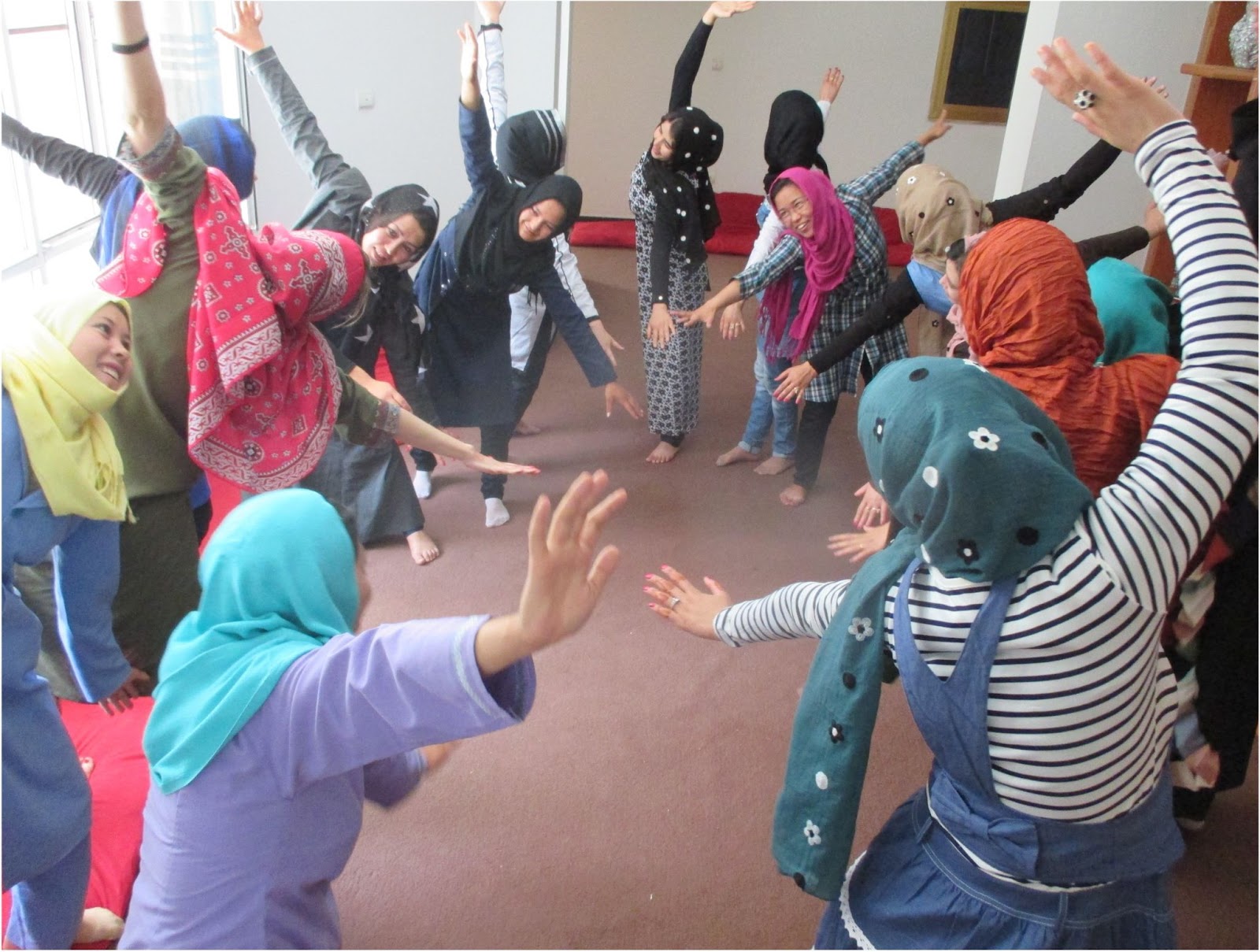
We did taxi over to the state-manicured Peoples Park;  no water cannons allowed in the park, but we did enjoy running through the sprinklers.   In the area marked LOVE we hung out with a couple of park rangers, whose job apparently is to make sure that the young love-birds sitting in the cul-de-sacs keep their hands visible at all times.  Not sharing a common language, I showed them our mini-portfolio of pictures from our tours, and the images of us working with the Afghans elicited a lot of conversation between them.  The man then pulled a cross from around his neck, indicating that he was a Christian and, I think, inquiring if perhaps we were Christian missionaries working to convert the Afghan Muslims.   I'm not sure what brand of Christianity he thought uses stilts and outrageous costumes, but, no, that wasn't our job.

This is the table at the Gitameit Music Center around which Bond Street Theatre and Thukhuma Khayethe make our master plans for bringing a new version of "Volpone" into the world.  Playing the part of Michael McGuigan is Eugenio Barba of Denmark's Odin Teatret.  To his right, playing herself, is the wonderful Odin actress Julia Varley.  They were both traveling around Myanmar and their pass through Yangon coincided with our stay here.  We had a lovely afternoon together before they headed to Bali.

And here we all are outside the Gitameit gate.  Obviously Eugenio won the part of playing me because of the hair color.  

Next blog:  all the work we're doing (probably more words). 

Tuesday, April 16, 2013

Starting Anew in Myanmar: Update 2

Joanna Sherman's update from Myanmar on blending the East and West on stage, Burmese culture "opening up," and the future of theatre in the country.

Finally -- greetings from Myanmar!  All is going very well.  We have been having some fascinating discussions with Thila Min about Buddhism, life, theatre, making sense of the recent violence here, Myanmar cultural history, and... the play.  All endlessly interesting. 

Basically, we have been exploring how Burmese performance styles and US/European styles can blend in style, character, setting, music, dance, and structure of the play. We are watching DVDs of famous zat pwe performers and performances, looking mostly at structure: for example, they always begin with the Nat pwe, a dance to certain spirits to get on their good side. Otherwise these spirits seemed to me to be a bit shady or hedonistic (tricksters?) who could play some nasty pranks during the performance.  So perhaps we might start with such a dance -- what fun!  At the same time, the costumes and altar to these spirits are, as Thila says, very "bling bling", which fits right into Volpone's love of "bling".  The altar to the spirits could very easily become Volpone's altar to his gold, and the play does open with he and Mosca's worshiping their stash. 

We have had further discussions on where the show will travel, what kind of venues, and who would our audiences be??  These are huge questions since modern theatre is really unknown!  Just like Afghanistan... for slightly different reasons.  In one, the government forbade it on religious grounds, and the other, the government forbade it on political grounds. As things loosen up, the Thukhuma Khayeethe folks seem to think it is time to take modern theatre public. But still, who will our audiences be?  The National Theatre here in Yangon still stands idle except for rentals for big events. But even the concerts lose money.  The zat pwe is very cheap and everyone knows exactly what to expect.  Could we do some scenes in the pwe?  Thila says not.  People go the pwe to have a night out of entertainment, but actual attention to what's on stage drifts in and out depending on personal taste, who's awake and who's sleeping, what's to eat, who you're with, etc.  It's a night-long picnic. Everyone knows the stories so no need to actually pay attention.  A serious tale (however comical) would not command attention with the pwe crowd. 

So we are thinking that perhaps cinemas might offer a venue, or maybe schools... we are starting anew here. There is no knowledge of modern theatre. If we succeed, we are opening a new door.  It is quite like what we were doing in Afghanistan with Exile Theatre -- first people who saw our work were aghast at what they saw in our abstract surreal storytelling... then slowly they all tried to mimic it.  (At least in Afghanistan they had a tradition in the Stanislavsky style from the Russians two decades before).  Here we hope Thukhuma Khayeethe can lead the way. I expect it will have a tough start, and that's why we are trying to cagily introduce some mix of East and West to ease in some new ideas.

We still have a lot more decisions to make about language, costume, character, staging, music, etc. but we are off to a good start.  We made a great start in our prior rehearsal process, and now (especially since things are truly looking like they are opening up... even just over the course of one year) we can really plan to take our show public!  Not just hidden away at Gitameit or the American Center or Alliance Francais. 

We have a hiatus now in our work on the play during the Water Festival.  It officially starts today and we will report!

Monday, April 15, 2013

Yangon News #1


Michael's update from Yangon on the current situation on the ground, the effects of history, progress, and the Water Festival.

Greetings from Yangon...
...where the weather is hot and the atmosphere is peaceful.  It's the calm before the storm, the storm being the New Year Celebration and the infamous Water Festival which starts today, Saturday April 13.   I'm getting the impression it's like being in New Orleans for Mardi Gras and Times Square for New Years.  We have an expectation of getting continually soaked by water cannons and blasters, and assured that my sins or bad karma or both are being washed away.  Another reason not to drink the water.

Joanna and I are here to flesh out the plans for a US - Burmese production of Ben Jonson's Elizabethan-era comedy, Volpone, which we plan to produce with our friends in Thukhuma Khayethe (Art Travelers Theatre Co.) with whom we've been training and performing since 2009.

Our first visit four years ago was under the watchful eyes of the military dictatorship, which kept the beloved lady Aung San Suu Kyi under house arrest.  Our last visit a year ago had seen Suu Kyi released and elected to Parliament, and a new "open" era coming in (hopefully).   Now a year later, we are getting the skinny from our friends on how things have been going.

If you have been following the news, you may be aware that there have been recent clashes and bloodshed between the Buddhists and the Muslims. To understand where this comes from, we have to take a step back and remember our cultural history.

First, the name Myanmar vs Burma.  In the Burmese language, and we are talking history here, the name of the country when written in official King's court documents is Myanmar.  When the commoners speak it, they say Burma. This notion of having special words for the King and other words for commoners is not rare in world languages.  The British, having had colonies all over the place including here, referred to this territory as Burma, partly to stick-it to the former royal rulers.  But there are a lot of ethnicities and religions:  the majority are Buddhist and ethnic Burmese, but there are also Muslims, Christians and Hindus who are Shan, Karin, Mon etc etc.  When the military took over somewhat after the Brits left, they changed the name to the more "inclusive" Myanmar (inclusive sounding, though the military was primarily Burmese, paranoid and brutal to anyone remotely dissenting).

There is a good primer and political update on this Burma - Myanmar - US relations issue at the Washington Post.

With that background and even a vague understanding of world politics, its pretty easy to guess what happens when a formerly oppressed people gets a taste of freedom and democracy. They use their new-found voices to yell at each other. Every under-educated charismatic bullet-head now figures their opinion is better than the next guy, and they get on the radio and say "ya know, these [insert ethnic group here] people are dirty and smelly and taking over our way of life. They should leave."  So yeah, there are ethnic tensions, these days particularly between the Buddhists and the Muslims. Myanmar shares a border with Muslim-majority Bangladesh, and the politics are akin to the immigrant situation between the US and Mexico.   Arizona, anyone?

More to the point, our friend Thila Min (director of TK) reports that people are happy to take their rights, but not the responsibility.  Freedom of speech can be used for good or for evil, but nobody wants to be responsible for the evil their speech might unleash.  Sound familiar?

Thila's English is very good,  but I wouldn't have thought he knew a word like "crony", which he uses a lot to describe another problem: rampant crony-ism.  There is a great deal of deal-making, land grabbing and back scratching between politicians, connected merchants, and foreign interests, all to the detriment of the poor and middle class that the new openness was supposed to help.

But, by and large, there are "onward and upward" kinds of changes going on. We've been staying in the same neighborhood through these years, and just in the last year we have seen many new and modern homes spring up, gigantic hotels, new car dealerships, all in formerly vacant lots. I don't know if they are getting any business, but the construction companies must be making a killing. The members of  Thukhuma Khayethe also hear the siren call of business opportunities outside of theatre work.  One of the finest clown-actors I know, Soe Myat Thu, is getting a lot of work instead as an English-French-Burmese translator for all the foreign business people descending on Yangon.

But the theatre work does go on. We have had some great meetings with Thukhuma Khayethe about our co-production of Volpone, and we're learning more about the culture and seeing how it might manifest in the play, which is exciting.

Next: swimming in the Water Festival.

Monday, March 04, 2013

Why We Can't "Fix It"


Joanna received this note from an NYU student following her Power of Performance: Theatre in War Zones talk at Gallatin on February 11.

Dear Joanna,

I attended your talk at NYU Gallatin a few weeks ago, and meant to write to you the same night, but it turns out I needed a bit more time to process my thoughts.

For some background, I am an NYU Abu Dhabi student, originally from Vermont. I am a theater major who is still trying to figure out my direction, though I have dabbled in playwrighting, directing, lighting, and stage management. I love theater, and I love creating, but I am really passionate about how theater can be used as a tool for communication, healing, and understanding, both at home and abroad.

I have traveled to Nepal, Oman, the United Arab Emirates, and, most notably for me, India. I visited those places for various reasons – primarily tourism and volunteering.

Although that isn't quite the right word. Because it wasn't volunteering in the sense of “oh, lets go into a place and 'fix it,'” – not, “lets go somewhere and bring our superior knowledge, and implement our ways.”  Instead, it was, “I want to go somewhere, and collaborate, and learn, and assist where I can and be quiet and observe when I can’t.” We ended up working on a one-room health center for the town, located right next to one of the main preschools, because the nurse had been working out of the back of her home – something she knew wasn't good for her family or her patients.

I feel like I learned much more than I gave on that trip, and it gave me a lens with which to view travel and work abroad. Coming into your talk, I was honestly a bit worried – worried this would be another case of people who thought they knew best, trying to go into a place and “fix it.”

Instead, what you spoke about was a group of collaborators who understood what it was like to travel, to be inspired, and to create. I respected how you spoke about your experiences so much, and left inspired and thankful that there are groups who treat theater and travel in such a human way.

What struck me first was when you questioned the use of the word empowerment – because you are absolutely right – the people you work with already have power, and you are just providing tools and a safe space to speak and create. You also spoke about working with artists, about using theater for education, and for healing. How theater can get ideas across when words fail us, as they so often do.

Then you talked about building a relationship – not just going in and leaving. That is what haunts me about my trip to India – I promised I would return, and have not yet filled that promise, although my high school has brought other groups back, which is comforting.

I respected this discussion so much, and I left motivated – and I thank you for that.

Thank you again for the work that you do – it is much after my own heart.

-Brook
NYU Abu Dhabi Class of 2015


Wednesday, February 13, 2013

Theatre of Ideas


Our wonderful Design and Management Intern Chris DeFilipp of Bennington College sums up his BST internship experience.

When I joined Bond Street at the start of January, I never expected to have accomplished and learned so much in the six weeks I’d be interning here. But here I am, five and a half weeks later, with only three days left before I leave Bond Street and New York City to head back to Bennington College for my spring term, and I have to say, I’m really going to miss this place. I can safely say that Bond Street will be an experience I’ll never forget--nor would I want to.

Last night, Joanna spoke at NYU Gallatin on the Power of Performance: Theatre in War Zones, and I had the opportunity to sit in on her lecture. It acted as a sort of closure for my internship, as many of Joanna’s stories were summarized and contextualized that evening. Stories I’d been told weeks prior were used to emphasize her points, and the whole talk wrapped up my internship perfectly. Her talk discussed the history and process of Bond Street, focusing particularly on the importance of physical and intellectual communication, with the physical communication of theatre allowing intellectual communication, the transfer of ideas between the performer and the audience, to be possible across many different barriers.

One of the many things that stuck with me was Joanna’s tale of the traumatized children in the refugee camps. They did not speak or understand English, so Joanna communicated with them through activities such as “follow-the-leader”. Through solely physical communication, the children were able to participate in activities, and those who were traumatized had the chance to come out of their shells--and eventually did so, at their own pace. Her story made me think about how physicality can manifest itself in theatre as a way to communicate ideas, and to involve an audience--both intentional and unintentional--in the experience. I realized how theatre from all regions can still have an impact no matter the audience--it’s not the language that we’re communicating in, but the way in which we’re physically communicating, the way we’re acting it out, designing the space and the world, that makes theatre a language of its own.

However, I think Joanna ultimately spoke to a much larger point, a point that encompasses this physicality of theatre and goes beyond it: that ideas can be communicated through the physical means of theatre. There may be a verbal or musical aspect, and the tone may vary from tragedy to comedy to anything in between, but for the most part, the main goal of theatre is to communicate and address, through a physical staging of a script or other dramatic material, certain ideas and opinions. For Bond Street, these ideas are typically issues that the groups they work with want to address, but for me these ideas are of science, mythology, literature, art, and of fields of thought that the audience may not be aware of. I feel that any story, even a love story, murder-mystery, or drama, can offer an audience more if it offers some sort of intellectual nugget of information they may not have known or thought about before. This is one of the things working with Bond Street has helped me to fully realize: that using theatre to communicate ideas is, in fact, very effective, and can help to offer more than just entertainment or knowledge to an audience.  It can offer a new way of thinking about the world around us.

Thursday, December 06, 2012

Bhopal: Play Review


Our intrepid intern Henry Moorhead reviews the US production of Bhopal, and outlines his hopes for audiences around the globe.

On the 18th of November in New Brunswick NJ, Epic Actors’ Workshop and Bond Street Theatre merged to create a play on the effect of this catastrophic disaster of Bhopal.  The play tells the story of December 3rd 1984, when a pesticide plant exploded in Bhopal, India, leaking over 40 tons of methyl isocyanine gas and killing over 2,000 people instantly and many more as the toxins reached the human bodies.  Years later children were born deformed or physically impaired due to the direct impact of this tragic disaster.  Today the effects are still felt, and Bhopal demonstrates the level of impact one incident can have on the entire world. 

The play opens as the police in Bhopal try to convince Dr. Sonya Labonté (played by Anna Zastrow) to leave the slums of Bhopal and go back to her native Canada.  The relationship that Dr. Labonté develops with her patients (women in the slums of Bhopal) is so authentic, it shows the reality of what it was like during the disaster.  Ms. Zastrow lights up the stage with her captivating presence as she tends to the women who have suffered. 

The chorus (who play the woman of Bhopal) represents the essence of the world in Bhopal. The physical and vocal choices they make pull the audience in closer and allow the piece to build.  They demonstrate the core of the play, as they are the ones who are affected the most.   

Jaganlal Bhandari, Chief Minister of State in Bhopal (played by Sajal Mukherjee), dives deep into his character as a misguided and corrupt driven man and creates conflict with his stubborn views. 

Throughout the play the themes, dialog, and interactions exemplify how difficult it is for first world counties like the United States and third world countries like India to work together. Given the laws, culture, and methods of operating are so different; it takes immense effort and perseverance to make an impact individually.  Dr. Labonté epitomizes this on many levels.  As the play deals with such heart wrenching and severe issues, the moments of comic relief heighten the essence of the play.  For example, Pescale Suavé (played by Shai Lendra Khurana) retorts,There are so many laws, it is impossible not to break a few.”  The audience chuckles and it gives them a chance to relax. 

After premiering in New Jersey in the United States, Bond Street takes Bhopal across the globe to tour in Nepal and India.  I hope the audience comes away how essential it is to make sure the necessary precautions are set in order to prevent future environmental catastrophes from happening.  Bhopal is a prime example of a play that continues Bond Street’s mission of “Creating Peace Through Theatre.”

Thursday, November 29, 2012

Hopefully, a Chorus Line: The 'Bhopal' Tour


Ilanna left today with the ensemble to tour 'Bhopal' to three festivals in India and Nepal.  She is the Chorus Leader and choreographer, and writes about her thoughts, concerns, and excitement about introducing new Chorus members during the tour!

Birsa, one of my fellow chorus members in Bhopal (and the only other chorus member to be embarking on our upcoming India and Nepal tour), asked it most succinctly when he looked at me after our show at the South Asian Theater Festival, a bit bewildered, and asked, “How are we going to train new chorus members in a couple hours what took us two months to learn?”

Ilanna rehearses with the rest of the cast in New Jersey.
Feeling optimistic (and hoping to appear so to appease his worried glance), I casually replied, “Don’t worry! It took us a month and three weeks to figure out what we were doing, and only about a week to internalize it and make it look flawless!” This statement is more true than false, but I wouldn’t go so far as to say it’s 100% truthful. 

I am concerned about how we will transpose the images that we spent weeks creating to a new stage, with a new group of chorus members, but I’m not losing sleep over it. Birsa and I know the play and the chorus’s parts so well now. Much of the trickiness comes from timing -- when’s the exact moment the chorus enters (in the light? or at the whistle sound cue?), when do we take a step as a group (are we following the leader? or waiting for the word “no”?), how many seconds do we count before we break our held poses (I know this one... it’s 8). 

Between the two of us, I think we will be able to direct traffic well. What we don't have quite enough time to perfectly teach, the chorus will pick up by our example.  Joanna, the director, has the chorus doing a series of repetitive movements throughout the play that are simple to teach and easy to learn.  The beauty and impact for the audience comes from the simplicity, timing, and group mentality of our actions. I feel confident that once we teach our new chorus members the actions, they will effortlessly find their places onstage, and find their own ways to influence how we tell this story.

Above all, I am so excited to be interacting with new actors in each location we will be touring to. How exciting to get to meet local actors at each festival, who jump in and become part of a bigger story! I am looking forward to meeting our newest collaborators, who will add to our story and enrich our experience

Saturday, November 24, 2012

The YAP Rebooted!

Heddy Lahmann updates us all on the progress that she and Ilanna are making on the new Young Audience Program show, Amelia.

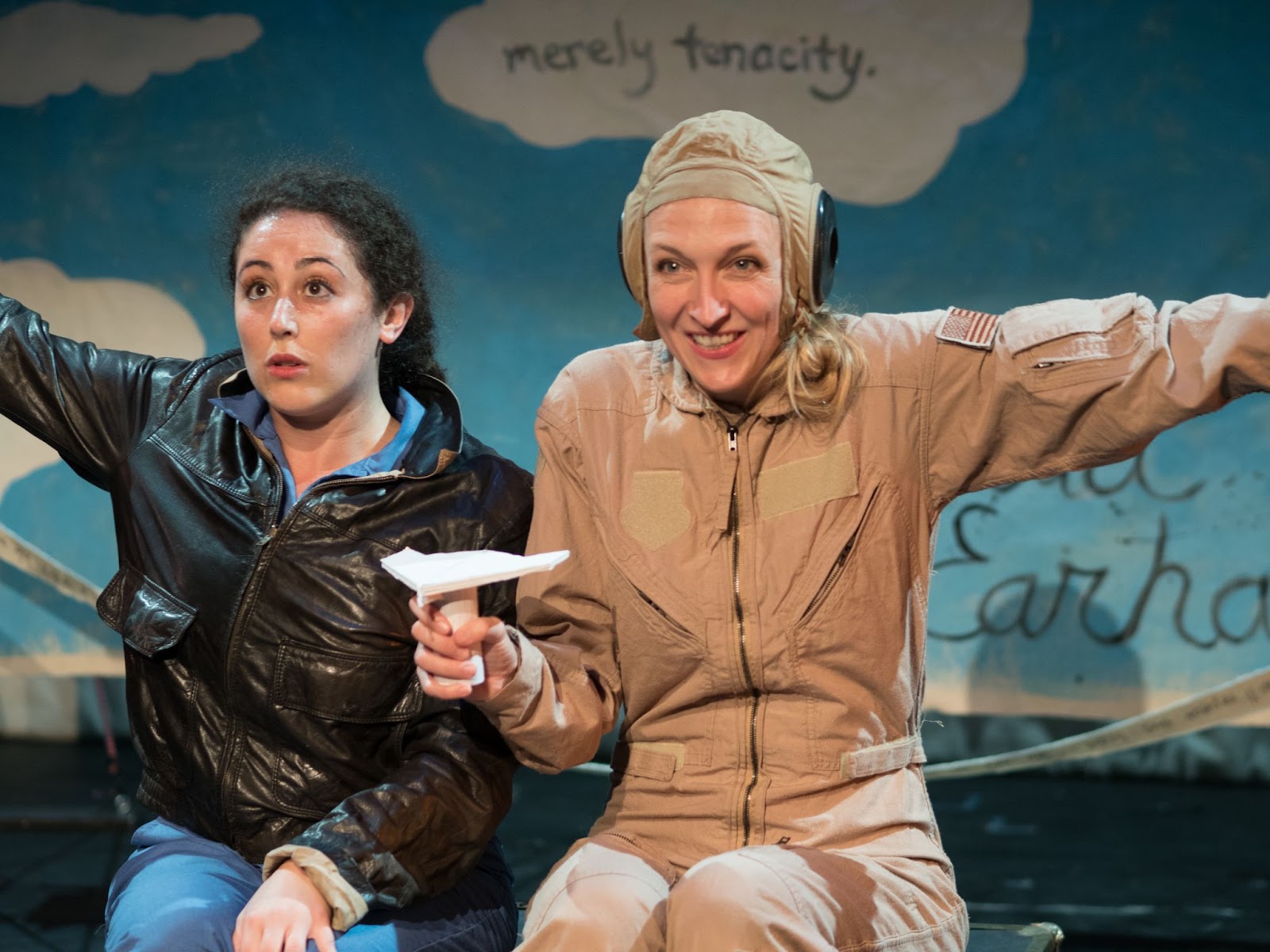
"The most difficult thing is the decision to act, the rest is merely tenacity. The fears are paper tigers." – Amelia Earhart

When I jumped on board with Bond Street Theatre in February of this year, I was thrilled to get involved with the international social development work that the company is doing, and also expressed an interest in the local New York City outreach via the Young Audience Program. Joanna and Michael encouraged me to go for it and get the fires burning under the YAP again.

As of September, Ilanna Saltzman and I began collaboratively creating a new piece for the Young Audience Program to take to NYC public schools, museums and libraries. Our subject? None other than the fearless pioneering aviatrix, Amelia Earhart. We were inspired to tell the tale of her courage to dream and desire to stand up and go against the grain, at a time when women were only just getting the right to vote.

We’re weaving our story through the lens of two explorers on a quest to uncover the details of Amelia’s life’s story and ultimately the mystery of her disappearance. Dealing with the disappearance in the context of a show for children does have its challenges. We obviously want to keep the story playful and uplifting as well as educational and historically accurate. In an effort to achieve this, we’re putting the focus on Amelia’s determination and bravery and throwing in some stilting to manifest the thrill of flight. Amelia said, "Decide...whether or not the goal is worth the risks involved. If it is, stop worrying." Amelia's moxie is contagious, and we're excited to pass it on to the young people of NYC.

Monday, October 01, 2012

How Do You Get to Jalalabad?


All still well in Kabul.  Most of our time is spent in the hotel these days, writing reports and working on the Training Manual, but we've had at least one important meeting each day; at the Embassy, the US Institute for Peace, the Theatre Department at the University...

We'll be doing some follow-up training with the Kabul theatre artists, and lots more meetings before heading back on the 5th.  In the mean time, should any of you be wondering what the heck we actually DO with these actors, I decided to detail one of the exercises to give you a backstage look.

How do you get to Jalalabad?

This is based on a little remembered Abbot and Costello routine from one of their old TV shows.  Kudo's to John Towsen for calling my attention to it about 15 years ago (and a shout out to our peeps currently playing in the NY Clown Theatre Festival):

Costello is on the street waiting for Abbott to return.  A women approaches him and asks:
(the dialogue is to the best of my memory)

Woman:  Excuse me, can you tell me how to get to the public library?

Costello:  I'm sorry, I don't know where the public library is.

Woman: Oh, well, if you go down Main Street and make a left at the corner go to the end of the street and make a right and...

Costello (confused): What a minute, wait a minute... I didn't ask you, you asked me.

Woman: I asked you what?

Costello: How do you get to the public library?

Woman: That's what I'm telling you! Go down Main Street and make a left at the corner go to the end of the street and make a right and....

Costello:  Wait a minute, Lady! I don't care about the public library!

Woman:  (Angry) Then what are wasting my time for? Who do you think you are bothering poor innocent young women on the street, you fat little potato!  I should call the police!  You are nothing but a masher!  (she smacks him with her purse and storms away).

Costello:  (completely bewildered) I'm a mashed potato!?!

Abbott: (walking up) Who was she?  What did she ask you?

Costello:  How do you get to the public library?

Abbott: Oh, well if you go down Main Street and make a left at the corner...

Costello runs off screaming.

It's a completely absurd bit, and one of the reasons we decided to do it was to get the actors to play "outside-the-box".   Also, it's vaudeville!  It's my roots.

Joanna and I would do the routine in English, with our translator translating line by line.  Since there aren't many public libraries around, we use "Jalalabad" instead.  Also, we dropped the masher / mashed
potato joke, as the pun never worked in translation (and they don't have mashed potatoes here).

Even with the awkward English/Dari or English/Pashto presentation, the actors understood the comedy immediately and always laughed.

For a simple, silly little bit it was a challenge for them to duplicate it.  They, of course, would do it in their own language.  Because the structure is so tight, we always knew what they were saying, or supposed to be saying.  But it would take about 15 - 20 minutes for them to get the structure correct: who entered when, who was asking what and who got angry at which time, and who stormed off when.

We would rotate everyone through the different parts, focusing on the subtle comic timings:  "Costello's" confusion, then annoyance, then really confused post-assault, then the build to completely losing it as "Abbott" starts to give him directions again.  The Stranger (does not have to be a woman) is absurdly matter-of-fact until they get to yell at Costello about how wonderful Jalalabad is: "what do you mean you don't care about Jalalabad! My mother lives in Jalalabad!..." etc.  A chance for the actor to improvise.

Some caught on faster than others.  A few never caught on at all, causing as much confusion and laughter as the routine itself.  Thing is, they all LOVE this exercise.  As far as I can tell from all the years of watching Afghan theatre, while they do comedy, they don't do absurdity, and maybe that newness has appeal.

They loved the bit so much they wanted to keep doing it, and we had to come up with "as if" variations:  same dialogue, but  doing it as if the characters are spies, or martial artists, or singing opera, or suddenly in love, etc.

Even months later, when I would see one of the actors again, they might catch my eye just the right way and say, in halting English (which they might not actually speak):  "Michael, how you get Jalalabad?" and we would launch into the routine in half English, half Dari, clearly playing the parts in the language of theatre.

Tuesday, September 25, 2012

A Picture is Worth 1,000 Words


An update from Michael on the road from Jalalabad to Kabul.

             On our otherwise uneventful drive back to Kabul from Jalalabad we were stopped by the police at the Kabul city checkpoint.  We had passed a number of checkpoints on the way, but this was the only one that stopped us.   We had to pull over.  A portly, unfriendly looking policeman opened the van door and stared at me in a menacing way, or perhaps it was just his "I-Mean-Business" look which can be similar to a "Menacing Look" but should have important subtle differences if you are a well trained actor which I doubted he was.   I stared back in my "slightly-bored-can-I-help-you?" look but, being a trained actor, I colored it with just a hint of submission as that tends to move things along positively with these brutes.

            He barked to our guide, AZ, that he wanted to see our passports, which we happily supplied.  Then he started asking to look through our bags.   "There, that bag, and that bag! What is there?"  "It's fruit! You can see it is fruit!" AZ barked back.  I didn't understand what he was saying exactly, but clearly there was no love and respect.  When confronted by busy-body authority, many Afghans turn belligerent.  I never understood why, as it usually leads to more delays and chest-thumping.

            Now the policeman wants to look at our pile of luggage stacked in the back of the van.  Knowing that our workshop bag is topmost (excellent!) I have Joanna hand me the little portfolio we have containing photos of our work, for just such an occasion.  AZ later told me that on our way to the back of the van the policeman was asking him, "Why are you working with these Americans?  They make films that disrespect our religion!  Are you helping them make films?!"   AZ  said, "No! They are not making films, they are good people, what's wrong with you?"

            I'm not sure what he expected to find when he opened the first duffel bag; maybe he thought it would be film equipment, porn magazines, and fuel to burn the Holy Book, or maybe just a cache of weapons.  He sure wasn't expecting what he did find, which was three pair of stilts and juggling equipment.  His look of menace became one of confusion.  I helpfully showed him the pictures of us on our stilts in costumes, with the crowds of happy children, and our workshops with the Afghan actors.  "See?!" AZ was saying, "They are our teachers! They are good people, they are helping us!" ("You stupid cow", he added -- not with words but with inflection.  AZ is a trained actor, after all).

            There was more talk between them, and the cop softened, as they usually do after seeing the portfolio and the pictures of happy children.  He actually shook my hand and casually embraced AZ.   I don't think he was totally convinced of our innocence, but he let us go without further delay.

Tuesday, September 18, 2012

Kandahar Theatre Update 3: Another Job Well Done

Michael writes from Jalalabad on the work with Kandahar Theatre.

After the ten day training and rehearsal period here in Jalalabad with Maiwand Theatre Company both the men and the women have done their first productions, and now are heading back to Kandahar to arrange four more performances each.

Despite losing a day over the recent anti-film protests (not here, as far as I can tell) we accomplished a lot. Having the Kandahar team here 24-7 meant we could have more time with them, and they were motivated enough to train and rehearse on their own some evenings and early mornings. For the men's group, we decided to use a script written by our Nangahar Theatre collaborator, Zhwandoon; and for the women we used the script we developed last year with the Nangahar women's team. The men's show promoted the civil and religious laws that favor the rights of women (forced marriage not allowed, no violence), and the women's show called for unity among women and an end to the "backbiting".

This was a good opportunity to revisit past work. Both shows were previously produced by other teams, and the directors of the previous versions were on hand to help remount the new adaptations. Thus they got to see how we adapt and direct based on the strengths (or, in some cases, the lack thereof) of different actors for the same material. We also could delve a little deeper in acting technique without having to create new material.

The men performed yesterday at the Lincoln Learning Center to 75 appreciative high school and college age students, while the women performed early today at a women's training center (I forgot to get the stats from Joanna, sorry).  Both shows went very well, in our humble opinions.

There are a great many new insights and stories associated with the process, and I'll try to get them down in future updates, but here is one from rehearsing the guy's show. Though the basic story line has serious intent, one actor played the clownish nephew, and he was pretty good in the part. The central object in this tale is a government published book on the laws of the rights of women. At one point the nephew is holding the book up by his face as the teacher points out this and that law. His uncle comes up and slaps him on the back, and he closes the book on his nose. Funny comedy bit (if they get the timing right, which is about 65% of the time). Well, in our last rehearsal before the performance, one of the actors points out that the book also has Koranic laws written in it as well (NOW he tells me) and some members of the audience might not think it so funny. Well, I tell them, you guys gotta be the judge on this; if you think it's a problem then we don't have to do the bit, BUT (deep breath here), if the point of the show is to see how much the audience really knows about what is written in the law, this will give you an indication of what they know. I bet most of them never heard of this book, much less know what's in it, that's what you are trying to tell them. So maybe do the bit, and see if indeed you get a reaction. Well, they understood my point, but the consensus was maybe they shouldn't do it.

Of course, come show time and the actors clearly forgot the entire conversation, because they did the bit anyway, and nobody stormed the stage. It didn't get much of a laugh either, despite the timing being pretty good. I think more than anything else the whole concept of live theatre is still new to live audiences, and they don't quite know how to react until the end, when they applauded enthusiastically.

We'll be here in Jalalabad until Friday with some follow-up with our local teams, and then head back to Kabul to check in with the teams there.

Despite whatever is going on around the world, it's still a pretty big world, and it's been safe and sound in our neck of the woods. Still, we'll keep our eyes open and ears close to the ground, and follow the advice of our friends.

Much love,

Thursday, September 13, 2012

Kandahar Theatre Update 2: Safe Haven


Dear all, 
Things have been a bit dicey lately.  Our Afghan partner called us at 5:30am this morning to tell us to pack our bags and we were to evacuate Jalalabad for a few days. He would come by and take us to stay to his house in a small village outside the city.  We hadn’t heard a thing about this nasty film (and it is really awful – I am appalled even as an artist) so it was all a shock.  Now we are on lockdown at the hotel.  We decided it would be more dangerous to get in a car and drive to the village and endanger his family.  We are such a liability!  We put everyone in danger.
So the program is on hold for today and especially tomorrow, Friday – the usual day of prayer and protest.  
To put our friends at home at ease, I do think our hotel is a safe haven. We are staying in our rooms with meals delivered up from the kitchen.  There are a bevy of guards at the front gate and they have added more.  Then there is a long driveway (through a very nice garden) up to the front of the building.  They frisked our male escort on his way in, and stopped even the women… so they are really being careful.  
One of our partners came over to deliver burqas for me and Monireh, and some additional details to add to Michael’s Afghan attire.  Meanwhile the Afghans have been telling people (and only few people know we are here) that we are from Australia.  I usually say Canada, but whatever.
The trainings were really going well – we were all very pleased!  It’s a shame to make this break in the process right now.  We had just started discussions on what topics the shows should address.  The Kandahari group is really learning a lot.  Besides the obviously new stuff – our crazy warm-ups, the stilts, funny routines, etc. – many of the acting techniques are very new… even the mime.  They had some image theatre from Kayhan, but we are dealing with purely actors’ training first, then we will move into the conflict resolution work as we develop the play.  So we are focusing on body language, precision of gesture, focus,… all detail work that they haven’t been exposed to.
That’s the news from the front….  We will let you know how things develop.  I am a bit concerned about tomorrow, but we will, as ever, keep our heads down.  (Under my burqa, I have to… or I’ll trip).

Cheers –
Joanna, Michael, and Monireh

Tuesday, September 11, 2012

Kandahar Theatre Update 1: Making it Work in Jalalabad

Michael writes about the process of traveling to Jalalabad to work with Kandahar Theatre, setting up the houses, and the challenges of electricity and running water.

All is well, we are here in Jalalabad. Joanna, I and Monireh (our Kabul-based collaborator) are staying at a local hotel, while the Kandahar Theatre Company is staying in a house directly across the street. The most dangerous part of our project is crossing that street each morning and afternoon.


The journey here from Kabul was interesting. The car that was sent to pick up the three of us was not nearly big enough for us and all our luggage, but it only took about a half hour for Ahmad Zia dismiss the first driver and car (at a cost of $40) and hire another, bigger passenger van. We drove for about forty minutes out of the city and through several small towns; when we slowed for a speed bump in the middle of one market area a bunch of surly guys started to pound on the car with sticks. These brutish, grunting Neanderthals turned out to be the toll collectors.

Interesting system. The toll was 4000 afs - $80 - and you'd think at those prices they could at least afford uniforms, if not actual toll booths. Reluctantly, the driver paid the toll. Then, about a mile down the road, the van broke down from a shattered fan belt. So, a third vehicle was called, slightly smaller than the second but still managed all of us and our stuff. It's a shame the van didn't break before the toll.

We got through the mountains and two hours later were dropped safely at the hotel. I paid $100 for the third vehicle. So if you were keeping track, that was $40 for a car we didn't use, $100 for the car we did, and in there was a $80 toll which no one asked me to pay. There is much that is inscrutable about the economics of Afghanistan.

Our local Jalalabad contact worked out an arrangement to rent a house for the Kandahar company, thinking it would be better than a hotel -- cheaper (potentially) and they can cook their own meals. That of course assumes that the house has water and electricity - which, when we arrived, we found it did not, though it did have excessive dust covering everything. No worries; we are assured it will all get better soon. The group arranged to stay the night in a local hotel (not our hotel). Although it did have water and electric, the hotel was so stifling hot that the house was deemed preferable despite its limitations, and they moved in the next day - the six women on the top floor, and the five guys below.

The plumbing and electricity were mostly fixed in a day. The limited electricity comes from a rattling old generator in the yard, as there is only 1 hour of electricity supplied by the city. While this keeps the water pump churning, the electrons don't seem to flow to any of the ceiling fans. Still, the Kandaharians seem satisfied with all that. 

Our hotel does have pretty good AC in the rooms; a luxury in this country, but without it we would go mad. Especially because we didn't have any water for three days due to a big problem with their pump. Well, we didn't have water in the pipes, they did supply us with big buckets of the
vital liquid. Cold water.


We are rehearsing in one of the rooms of the house, so our view of Jalalabad this time is extremely limited to crossing the street.
Next update - the training process.  Watch this space.

Much love,
Michael and Joanna

Tuesday, September 04, 2012

An Uplifting Family Experience


BST intern Zoe Travis taught her family to walk on stilts at their family reunion - and they loved it!

            The moment Michael heard I was leaving the office early for a family reunion, he immediately started to assemble a “to-go” stilt bag. I would be going to a gathering of family members of all ages, from all over the country, who only see each other every couple of years- of course I had to bring the stilts! In a magically compact bag, Michael threw in my fancy, newly crafted personal stilts, two extra stilts, stilt pants, and some juggling balls (just in case). I managed to lug it all to Penn Station and arrived, stilts in tow, in Lyme, New Hampshire the next day.
                            
          Lets just say, that the Travis Family Reunion of 2012 will forever be remembered as the time when every single one of us, ages 12-70, learned how to walk on stilts. Once word had spread that I brought stilts to the reunion, everyone jumped at the opportunity to give it a try. The night before our “big stilt lesson” many people were skeptical and said they would never be able to take steps on their own. But I am proud to say that it was only a matter of minutes before until most of my family members were prancing around, forming kick lines, and showing off their dance moves. For a family that doesn’t have much contact throughout the year, it was very clear that we still have a lot in common. The Travis’s are stubborn, competitive, and determined to get it right. Throughout it all we were supportive, encouraging, and ready to learn.
             Throughout the weekend, stilts remained a major topic of conversation. Everyone had so much to say! I asked my relatives to reflect on the experience, and here is Uncle Mark's response:

Zoe taught her entire family to join her up on stilts!
"At first I thought there was no way that I would be able to keep my balance, and that I would topple like a dead tree. But when I saw one family member after the other not only manage the stills but with great pride launch out on their own without support ... I knew it was possible and way more than desirable. I was hooked. So when it came to my turn I felt those old fears and trepidations creep in and those little voices saying, "what are you thinking", "you're doomed", but with Zoe's unending encouragement (by this time she was wandering around on her stilts, looking magnificent in her long black pants) I hoisted myself up. 

The first sensation was pretty much what I expected. No balance, no security, just hold on tight to everything within your grasp and you'll get through without major embarrassment. But then I took a few steps and I felt this rush of courage and conviction. Watching Zoe hover above me on her much longer stilts with that glorious smile on her face gave me the last bit of courage that I needed. And without thinking I let go of my two handlers and ventured out on my own. Wow. I felt like a giraffe. Maybe a baby giraffe, but a giraffe all the same. With wobbly legs, every core muscle tightening in response to the new challenges, I took bigger and bigger steps. 

 And then I decided to turn. And turn I did. And then I found myself just rocking back and forth, foot to foot, stick to stick - just like I had seen Zoe do so gracefully. And it was in that moment that I knew I was totally on my own. That I had accomplished something that I had never seen as possible. A new experience of independence, floating high above the masses feeling oddly empowered. 

I think my favorite part of my short stilt-walk was when I was dancing with Zoe. One, two, three, Kick. One, two, three, Kick. A beautiful moment of abandonment, fearlessly dancing on two sticks. A great metaphor for how we could all live. Maybe we are more secure when we place ourselves at the edge of disaster, maybe we are more connected if we elevate ourselves, not so we can be better seen, but so we can see better. Maybe we will slow down and be in the moment when we can't move so fast and when every muscle in our body is focussed on staying upright. Maybe...

Thanks you, Zoe. It was a moment I will cherish forever.  Cheers, Mark"


Wednesday, August 15, 2012

Intern Spotlight: Heddy Lahmann


Program Associate Heddy Lahmann is a California native and a graduate of San Diego State and the University of Connecticut.  

All Roads Lead to Bond Street

Heddy strikes a pose.
I was 11 when I got my first theatre bug. As a shy kid in a new school forced to take a drama class, my first “solo” assignment filled me with terror. Much to my surprise, however, my classmates gave me a resounding round of applause when I finished my performance and suddenly I was receiving recognition and even praise from peers that were waaaaay cooler than I. That happenstance drama course gave me a confidence I'd never experienced before, and ultimately changed the course of my life.

I pursued my education in theatre with a fervor that took me through college and graduate school and ultimately brought me here to New York City. And while that little 11 year old narcissist within is still alive and well, my outlook on the application of theatre and performance in my own life and the lives of others has changed in the years since middle school.

As a grad student, a teacher of mine spoke about his experience working with an organization whose focus was international humanitarian outreach through theatre. I'd never head of such a thing! Something stirred inside and I had to get to know more. I wound up traveling as a performer with Clowns Without Borders to Haiti following the 2010 earthquake and performing in tent camps, schools, and hospitals. It was that trip that solidified for me that theatre could be used in more dynamic ways than I had ever imagined, and this was work that I wanted to pursue.
Go Heddy!

I stumbled on Bond Street Theatre's website via idealist.org and knew I had to be a part of what they were doing somehow. In March I met with Joanna and one week later I found myself in the loft space of BST, working alongside superheroes. One week after that, and they had me traipsing around the office on stilts! (These particular superheroes have no qualms about sharing their superpowers.) The folks at BST continue to blow my mind with their unwavering generosity of spirit, passion, dedication and drive to bring theatre to the most remote and sometimes dangerous of places-- boldly going where no one has gone before as pioneers for change. A day "at the office" may consist of watching/editing videos from the latest journey to Haiti or Afghanistan, booking the Stilt Band at a new venues, aiding in the preparation of grants and final reports, watching and learning the Young Audience Program DVDs, or a trip to the illustrious basement to gather another collection of treasures to take to Materials for the Arts. There's a lot of pieces to the puzzle of what it takes to run such a uniquely small and yet global operation. I am a happy little sponge during my hours here, taking as much knowledge, skill and swagger as I can possibly absorb.

Most recently, preparations have been underway for another Bond Street journey to Afghanistan, this one specifically to bring theatre by Afghan women (trained by BST) to Afghan women in the prison system.  The empowerment I felt as a timid adolescent that sparked my own love of theatre, that's what BST takes to the most seemingly impossible of locations to the most seemingly impossible of populations. On my own theatrical journey, I aspire to have the bravery, gusto, and even a jot of the kind of impact that Bond Street has had on the world. It's an epic and marvelous adventure to be learning about this invaluable work and the special folks who do it.
Singing On The Stilts....